Aspsås Prison
Three SecondsAspsås Prison is the fictional high-security institution at the center of Piet Hoffmann’s prison operation and the hostage crisis that follows it. Its gates, cell routines, unit transfers, and security passages make confinement appear tightly organized, but Hoffmann learns to work within those arrangements: he establishes a credible inmate identity, builds a drug market, and ultimately uses the prison’s own movement and staffing patterns in his effort to escape. The prison is therefore more than a backdrop. It is a closed world whose rules shape both his survival and the criminal operation he has entered to expose.
Identity and Setting
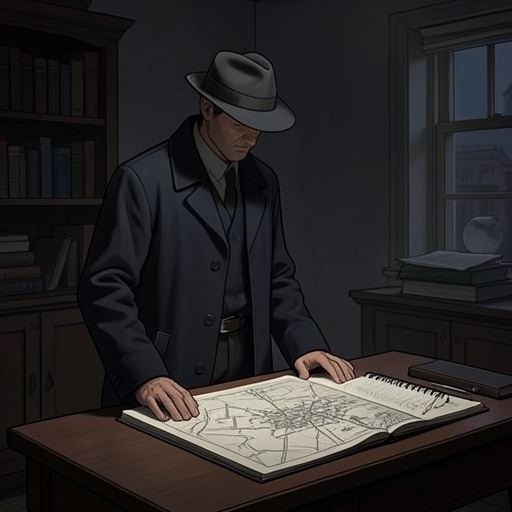
The novel identifies Aspsås Prison as one of Sweden’s highest-security prisons, with separate blocks, locked passages, central security, and controlled access. Hoffmann had studied the site from a church tower and, while on remand, learned about the prisoners and staff in Block G with Erik Wilson’s help. Yet his planning had not included actually entering the prison: the first time he passed through its iron gates was when he arrived as a prisoner. The difference between knowing the layout and being subject to it is immediate. Guards escort him through registration, remove his restraints, and conduct a search; he is then issued prison clothes and left in a sterile waiting room.
The institution controls time as well as space. After ten days, Hoffmann has spent twenty-three hours each day alone in a five-square-meter cell behind a metal door with a peephole. He has no visitors, newspapers, television, or radio. That isolation is presented as a means of breaking a prisoner’s resistance and making him compliant, but it also sharpens his awareness of how much he has come to rely on other people’s presence. Aspsås’s formal routines are therefore accompanied by a less measurable pressure: isolation alters what a prisoner longs for and how he experiences the day.
Admission and the Informal Prison Order
Once assigned to a unit in Block G, Hoffmann is shown its practical rules by the principal officer: where to use the toilet, how the unit operates, and why lock-up is at seven thirty rather than five minutes later. The guided tour is a lesson in the institution’s small, fixed procedures, and it gives him time to accept that the cell is now his home. He also knows that the unit will be empty for three hours while prisoners are at the workshop, library, or classroom, leaving a brief interval in which to prepare for their return.
Hoffmann turns that return into a deliberate introduction. Before the other fifteen prisoners come back, he sits in the television corner, where he can see each arrival and be seen in turn. He chooses a place associated with another prisoner, takes marked cards, and begins solitaire at someone else’s table without asking permission. The gestures establish that he is neither hiding nor waiting to be tested on someone else’s terms. He has studied photographs and backgrounds in advance, and is looking in particular for Stefan Lygas and Karol Tomasz Penderecki. Both are members of Wojtek serving long sentences at Aspsås; they have helped him eliminate competing dealers, but could become his executioners if his identity as Paula is exposed.
At supper, two older prisoners challenge his standing and demand to see his papers. Hoffmann lets them ask rather than allowing Stefan and Karol Tomasz to intervene. The encounter turns on respect built through shared hostility toward sexual offenders, an informal measure of belonging alongside the prison’s official records. Stefan and Karol Tomasz have already helped prepare that record: through Stefan’s lawyer, they obtained copies of Hoffmann’s criminal and prison documentation, including a judgment and police files. His authority in the unit thus depends on both performance and paperwork. Aspsås has a formal administrative identity for him, while fellow prisoners assess whether that identity will hold among them.
The Prison Drug Market
Aspsås is also the market Hoffmann has entered to advance Wojtek’s plan to expand into Swedish prisons. His prison identity is supported by a conviction for having three kilograms of amphetamine in the trunk of his car and by his rapid progression from remand to sentence and imprisonment at Aspsås. The amphetamine is associated with a distinctive tulip scent, a clue that links the prison’s drug supply to the wider investigation.
Hoffmann’s first move inside is to use forty-two grams of thirty-percent amphetamine to remove the prison’s three principal dealers. The reports needed for the next stage reach Warsaw and the organization’s deputy chief, while Hoffmann prepares to establish himself as a new supplier. His objective is not simply to sell drugs: as the market develops, he intends to learn about supplies, delivery dates, and distribution channels, then provide the police with enough information to reach Wojtek’s center of operations before the organization expands to another prison. The operation requires him to let the market grow far enough to reveal its structure, even as that growth deepens the debts and dependencies created inside the prison.
He hides additional stock in the buds of fifty yellow tulips and on a cleaning cart beneath ordinary rubbish. The forty-two grams already used to displace the leading dealers come from four library books; the tulips hold another one hundred fifty grams. His first sales are to be limited to two grams per customer, regardless of pressure to supply more. The initial quantity is intended to reach seventy-five imprisoned drug users, creating debts to a new supplier who expects repayment. Hoffmann plans to expand his position further by taking control of two Block F wardens whom the prisoner known as the Greek has been paying to smuggle in larger quantities. Prison space, staff access, concealed goods, and debt all become parts of the same distribution system.
The novel’s closing factual note distinguishes the fictional institution from the practices it depicts. It states that Aspsås Prison does not exist, while describing drug supply in real high-security prisons as possible through methods that include amphetamine concealed in tulips sent to wardens, in hardback library books, and in bags placed in toilets. It also states that most inmates use drugs, that prison debts can contribute to reoffending after release, and that the Swedish Prison and Probation Service refrains from stopping supplies despite the possibility of doing so. The invented prison thus concentrates the plot, while the accompanying note directs attention to a broader institutional problem.
Isolation, Crisis, and Investigation
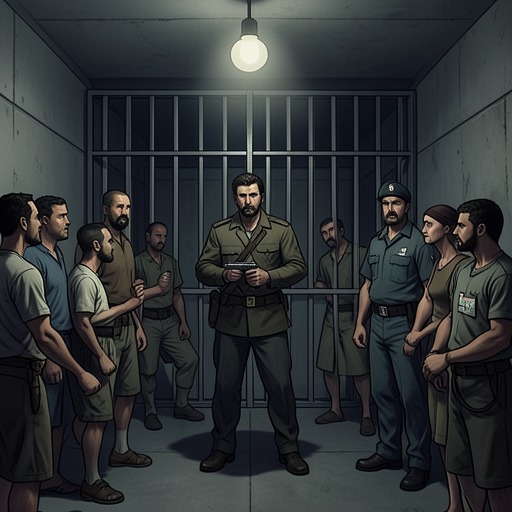
When Hoffmann faces exposure, the prison’s internal geography offers a temporary refuge. Ten members of the prison riot squad enter Block G; six remain to deter further violence, while four escort him to the voluntary isolation unit in Block C. That unit has sixteen cells and reproduces many of the ordinary features of a prison unit, including a wardens’ room, television corner, showers, kitchen, and Ping-Pong table. Its distinction is social separation: its residents may move around without encountering prisoners from other units. For Hoffmann, transfer changes who can reach him, but it does not take him outside the institution or its rules. He later suspects that one of the four people who had served as his protection and potential means of escape has betrayed him.
The crisis reaches the prison administration as reports of two guards locked in, a dead prisoner, and a suspected hostage-taking. The chief warden learns that Martin Jacobson has been taken by the armed prisoner identified as Hoffmann, who had been held in solitary confinement. The response brings the National Task Force to the prison. Its duty troops arrive in two heavy vehicles after leaving headquarters twenty-four minutes earlier; John Edvardson directs them toward the building’s upper floor, where four windows face the outer wall. The approach of armed officers and long-range weapons makes the prison’s controlled perimeter a stage for a confrontation that its ordinary routines cannot contain.
The prison’s official account is also contested. On Ewert Grens’s instructions, Mariana Hermansson visits the prison doctor in Block C. Through a small hospital-unit window, she sees a patient coughing in bed, but the doctor tells her that Hoffmann has never occupied any of the beds, that symptoms of an epidemic were never identified, and that isolation was never ordered. Grens understands that he has encountered a lie: the chief warden has prevented him from questioning a prisoner who is now holding a principal officer at gunpoint. The episode makes the prison’s records and medical procedures part of the struggle over what happened, rather than neutral descriptions of it.
After the hostage crisis and explosion, the prison is transformed into a crime scene. By morning, inmates have been evacuated from the affected building to Block K, and Block B remains cordoned off while investigators work. Four forensic technicians examine the charred workshop and soot-marked walls; diesel oil remains on the scene as a sign of the blast’s aftermath. Nils Krantz studies a hole in the workshop wall, while Grens and Sven Sundkvist return to the prison as the murder investigation at Västmannagatan 79 is also pressing for attention. The evidence gathered at Aspsås links the prison’s immediate emergency to the wider investigation and its unresolved questions.
Escape and Narrative Significance
The prison remains important after the crisis because its security system provides the evidence with which Grens reconstructs what happened. He reviews surveillance footage frame by frame, studies forensic and autopsy reports, and compares them with interviews. He requests camera recordings from the afternoon of May 27 and concentrates on camera fourteen, mounted above the glass front of central security. The footage records people passing through the controlled exit—wardens, visitors, prisoners, and suppliers—making the point of departure a crucial part of the inquiry.
Hoffmann’s own escape depends on patience and adaptation to the same environment. He hides in the prison’s water-and-electricity substation after someone enters it, waits another twenty-four hours to reduce the chance of discovery, and watches the time against a guard’s watch. Before leaving, he cuts his hair short with scissors and shaves away the beard he had grown for the operation. The change reverses the appearance with which he had entered the prison: four days earlier he had long fair hair and a three-week beard; now he is cropped and clean-shaven. He then moves through a passage linking Block G with central security behind three wardens who do not know the prisoners’ faces. The end-of-May influx of summer temporary staff, given only a short introduction and a brief course, supplies a specific vulnerability in the prison’s staffing pattern. Aspsås is designed to divide, monitor, and contain movement, but Hoffmann’s route out depends on reading its routines as carefully as its walls.
The prison’s narrative force lies in that double function. It is a closed system that subjects prisoners to searches, confinement, schedules, surveillance, and institutional records; it is also a social order in which status, drug debt, loyalty, and betrayal determine what those official controls cannot. Hoffmann’s changing position—from newly processed inmate, to apparent supplier, to isolated prisoner and hostage-taker, and finally to a fugitive altering his appearance—makes the institution’s spaces register successive changes in danger. Aspsås is fictional, but the account of its drug channels and its porous points of control gives the imagined prison a deliberately uncomfortable relation to the real world.